Sebi will be taking a number of measures to develop a derivatives market of commodities.

The fate of the $10 billion merger between Zee Entertainment Enterprises and Culver Max Entertainment, formerly Sony Pictures Networks India, is hanging by a thread, with the two parties unable to finalise an agreement as the end of the one-month grace period looms. The two parties are yet to come to an agreement over Zee Entertainment Enterprises Ltd (ZEEL) MD and CEO Punit Goenka leading the merged entity after Sony expressed concerns after market regulator Sebi barred him from holding managerial posts in Zee and any of the entities in a fund-diversion case.
The typical modus-operandi of such entities involves setting up of a company, followed by tall claims about their proposed business ventures.


A Sebi spokesperson did not respond to an email seeking comments.
Feels earlier rules were not in interest of minority shareholders.

Without giving specific details, Sebi said that SBI was being probed for 'alleged violation of regulations' contained in as many as 11 sections, sub-sections and clauses, including those related to the Code of Conduct, of the Securities and Exchange Board of India (Debenture Trustees) Regulations.

Stock exchanges and other market infrastructure institutions as well as their top officials are liable to face penalties for lapses in handling and recitfying technical glitches, with Sebi putting in a place a stricter compliance system driven by "financial disincentives". The markets watchdog has come out with a detailed Standard Operating Procedure (SOP) for Market Infrastructure Institutions (MIIs) less than five months after a technical glitch halted trading at the country's largest bourse NSE for nearly four hours. There will be a "financial disincentives" structure for MIIs -- stock exchanges, clearing corporation and depositories -- for any business disruption beyond pre-defined time, according to a circular issued on Monday.

In the current calendar year, small and medium enterprises (SMEs) have witnessed an impressive surge in initial public offerings (IPOs), surpassing the 2018 record. Over 150 SME IPOs have been introduced to the market, breaking the previous record of 141 set in 2018. According to data from PRIME Database, a primary market tracking firm, 147 companies successfully concluded their debut share sales by the end of October, raising a cumulative Rs 3,727 crore.

Market regulator Sebi on Wednesday proposed a new set of regulations for employee stock options, wherein certain restrictions imposed on companies for award of such allotments to staff members could be eased.

The ongoing weakness in the broader equity market is likely to weigh on primary market investor participation ahead, which has already begun showing signs of fatigue, analysts said. The spillover effect, they say, will continue as long as the midcap and smallcap segments remain volatile. "The effect will be felt in the IPO market. The subscription levels have come down in the last few days and recent 4-5 IPOs have not done well.
Regulator Sebi on Friday imposed penalties on Reliance Industries Ltd, its chairman and managing director Mukesh Ambani as well as two other entities for alleged manipulative trading in the shares of erstwhile Reliance Petroleum Ltd (RPL) back in November 2007. Fines of Rs 25 crore and Rs 15 crore have been imposed on Reliance Industries Ltd (RIL) and Ambani, respectively. Besides, Navi Mumbai SEZ Pvt Ltd has been asked to pay a penalty of Rs 20 crore and Mumbai SEZ Ltd has been directed to pay Rs 10 crore. The case pertains to sale and purchase of RPL shares in the cash and the futures segments in November 2007.

The new norms also seek to ensure that sufficient safeguards are put in place to avoid any misuse of its new powers and the required privacy of individuals is granted while conducting search and seizure operations.

From the 30 Sensex firms, Larsen & Toubro, Reliance Industries, Axis Bank, Asian Paints, Tata Motors, Bajaj Finance, Maruti, Bajaj Finserv, Kotak Mahindra Bank, Titan, Adani Ports and HDFC Bank were the major laggards. JSW Steel emerged as the only gainer.

Such listings will help internationalise our currency, give us economic heft, compel best in class regulations and further develop the professional-services ecosystem., says Amit Tandon.

The Securities and Exchange Board of India (Sebi) has introduced an optional T+1 settlement cycle for the markets. T+1 means that settlements will have to be cleared within one day of the actual transactions taking place. The regulator has put the onus on the stock exchanges to decide whether they want to opt for the shorter settlement cycle for any of the listed scrips. This can be done after giving a one-month prior notice to all stakeholders.
.jpg)
Sebi on Monday decided to declare illegal mobilisation of funds as a "fraudulent and unfair trade practice".

As a result, the deadline for filing June quarter results ends on August 15. However, only 1,538 companies out of the 4,000-odd listed firms managed to declare their results within the usual deadline.

E-commerce platform Snapdeal has filed preliminary documents with markets regulator Sebi to raise funds through an initial public offer (IPO), joining the league of internet-led businesses looking to list on domestic stock exchanges. The public issue comprises fresh issuance of equity shares worth Rs 1,250 crore and an offer for sale (OFS) of 3.07 crore equity shares, according to the draft red herring prospectus (DRHP). According to market sources, potential listing could value Snapdeal at about $1.5-1.7 billion.

"The defaults falling in the category of fraudulent and unfair trade practices, which in the opinion of Sebi are very serious and have caused substantial losses to the investors, shall also not be consented," the market regulator, which released a new framework for passing consent orders, said.

Markets regulator Sebi has ordered the attachment of bank and demat accounts as well as mutual fund holdings of Videocon Group founder Venugopal Dhoot to recover dues totalling Rs 5.16 lakh. The latest decision has been taken after Dhoot failed to pay the fine imposed on him in March by Sebi for not making disclosures about his interest in Supreme Energy as well as for not disclosing that Quality Techno Advisors Pvt Ltd (QTAPL) and Credential Finance Ltd (CFL) were related parties with respect to certain transactions. In an attachment notice on Monday, Sebi said the pending dues of Rs 5.16 lakh include the initial fine of Rs 5 lakh, interest of Rs 15,000 and a recovery cost of Rs 1,000.

These entities have facilitated illicit transactions worth thousands of crores of rupees over the past 2-3 years

The mechanism would also need to have necessary safeguards to protect whistle-blowers from victimisation, while checks would also be required against any misuse of this facility aimed at encouraging directors and employees to report genuine concerns and any wrongdoings at their company.
Investor bodies have been repeatedly making the point that suspending companies from exchanges only plays into the hands of the promoters who do not have any intention to service investors.

The new norms were cleared by the Securities and Exchange Board of India in New Delhi on Thursday and the relevant provisions would be incorporated in the listing agreement soon, Sebi Chairman U K Sinha said.

India Inc is staring at significantly higher compliance and governance costs, following the Securities and Exchange Board of India's (Sebi's) latest tightening of disclosure norms and regulations around the filling of key positions, the materiality of information, and third-party transfers. Recently, the securities market regulator amended the Listing Obligations and Disclosure Requirements (LODR) to introduce a raft of changes that will affect how listed companies go about transparency and disclosures. The new framework will further empower public shareholders and soon move towards a 'comply or be penalised regime or comply or explain' in the case of high-value debt-listed entities.

'We are in a position to start due diligence and private data room access shortly.'
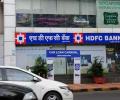
HDFC Bank on Wednesday reported a 2.3 per cent year-on-year rise in its consolidated net profit to Rs 17,657 crore for the October-December quarter, restricted by slower loan growth. On a standalone basis, the largest private sector lender's net profit came at Rs 16,735.50 crore for the period, up from Rs 16,372.54 crore in the year-ago period, but marginally down from the preceding quarter's Rs 16,820.97 crore.

Growth-oriented technology companies have raised Rs 15,000 crore through initial share sales in the last 18 months and IPOs worth around Rs 30,000 crore by such firms are in the pipeline, Sebi chairman Ajay Tyagi said on Thursday. "Growing number of unicorns in the startup ecosystem is a testimony of the new age tech companies coming of age in our economy. These companies often follow a unique business model focusing more on rapid growth than immediate profitability," Tyagi said at an event organised by industry body CII. During the last 18 months, growth-oriented technology companies have raised a sum of around Rs 15,000 crore through IPOs (Initial Public Offerings).

Taking action against promoters of Gillette India for non-compliance to minimum public holding norms, Sebi on Friday ordered freezing all corporate benefits arising out of their stake in the company.

Signalling an imminent change in SpiceJet's ownership, potential investors including co-founder Ajay Singh and US-based JPMorgan have begun discussions with markets regulator Sebi over their investment plan for the cash-strapped airline.

The new corporate governance norms for listed companies, currently being finalised by the Securities and Exchange Board of India, may also mandate greater disclosures regarding IPOs, sources said.

The proposal has been discussed by Sebi's Committee on Rationalisation of Financial Resources, which favours setting up such a fund.

Sebi (Substantial Acquistion of Shares and takeover) Regulations, 2011 will take effect on October 22.
Sebi first began looking into the matter last month.

The agency has done five advertisements so far.

Strengthening of rules governing insider trading is among the key proposals in the agenda set by Sebi for 2018-19, along with making improvement to the Prohibition of Insider Trading Regulations (PIT) and Prohibition of Fraudulent and Unfair Trade Practices regulations.
Sebi has also asked the stock exchanges to set up a separate monitoring cell with identified personnel to ensure compliance with the new norms.

The government is planning to soon file the final papers for LIC IPO with market regulator Sebi, which will provide details about the price band, discount for policyholders and retail buyers, and the actual number of shares to be put on the block, an official said. The government is presently in the wait-and-watch mode because of the market volatility induced by the Russia-Ukraine war and will decide on the timing of the initial public offering (IPO) of Life Insurance Corporation (LIC). "We have got the approval of the DRHP and the next step would be to file the RHP, which will give details of the price band and the actual number of shares.

Sebi widens fraudulent, unfair trade practices list
